Non-invasive, no surgery, no implanted devices
TMS Therapy in Tuscaloosa, AL
When medication alone has not been enough, there are other options.
Transcranial Magnetic Stimulation (TMS) is a non-invasive, FDA-cleared treatment that uses gentle magnetic waves to stimulate areas of the brain that are underactive in individuals with depression. At Novus, we use BrainsWay Deep TMS technology to deliver targeted, effective TMS therapy in Tuscaloosa, Alabama.
Insurances We Accept








What Is TMS Therapy?
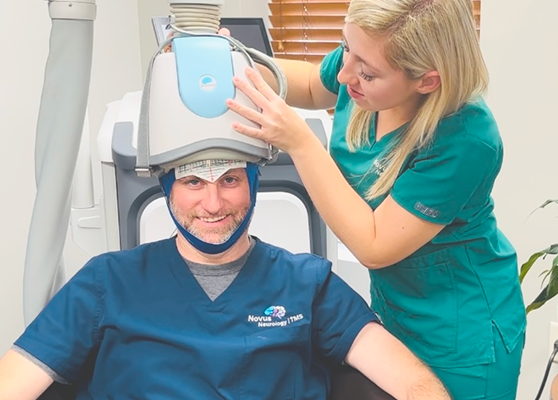
TMS uses electromagnetic fields to stimulate neurons associated with mood and emotion. A coil is positioned on the patient's head to target specific brain regions involved in depression, with the goal of improving brain function and reducing symptom severity over time.
Because TMS targets the brain directly, it works differently from medication. There is nothing entering your bloodstream, no systemic effects, and no recovery time. Patients return to their normal routine immediately after each session.
Request an Appointment ➔Because TMS targets the brain directly, it works differently from medication. There is nothing entering your bloodstream, no systemic effects, and no recovery time. Patients return to their normal routine immediately after each session.
Benefits of TMS Therapy

Your Initial Consultation
Before treatment begins, our team conducts a thorough clinical evaluation to review your diagnosis, treatment history, and overall health.
This visit is also a chance to walk through exactly what TMS involves, what to expect during sessions, and what results typically look like.
This visit is also a chance to walk through exactly what TMS involves, what to expect during sessions, and what results typically look like.
During Treatment
Each TMS session at Novus follows the same straightforward process:

Immediately After Each Session
There is no recovery period. Patients drive themselves home and go about their day as normal. Some experience mild scalp sensitivity or a tension headache in the first week or two, which tends to resolve on its own.
When to Expect Results
TMS is not an immediate fix. Most patients begin noticing changes after two or more weeks of consistent treatment.

The BrainsWay Deep TMS Difference
Novus uses the BrainsWay Deep TMS technology platform, which is built on patented coil technology capable of reaching greater depth and breadth of the brain than standard TMS systems.
Novus uses the BrainsWay Deep TMS technology platform, which is built on patented coil technology capable of reaching greater depth and breadth of the brain than standard TMS systems.
We also use Deep TMS for off-label treatment of PTSD, ADHD, memory disorders, tremor, stroke recovery, autism spectrum disorders, insomnia, and generalized anxiety disorder.
Is TMS Right for You?
TMS may be a good fit if you:
Our providers review each patient's full history before recommending TMS to make sure it is both safe and clinically appropriate
Frequently Asked Questions
TMS may be a good fit if you:
Treatment runs five sessions per week for six to eight weeks, with each session lasting approximately 20 minutes.
Does TMS hurt?
Most patients tolerate TMS well. A tapping sensation on the scalp is common during treatment. Some experience a mild headache in the first few sessions, which typically passes quickly.
Is TMS the same as shock therapy?
No. Electroconvulsive Therapy (ECT) uses electrical current to induce a controlled seizure and requires anesthesia. TMS uses magnetic pulses and does not cause seizures, require anesthesia, or alter brain structure in any way.
Will TMS affect my memory?
No. Memory loss is not a side effect of TMS therapy.
What are the risks?
The most commonly reported side effect is a mild headache in early treatment. Seizure risk exists but is rare, occurring in approximately 1 in 10,000 patients. Patients with a history of seizures should discuss this with Dr. Prestley before starting treatment.
Does insurance cover TMS?
Most major insurance plans include TMS coverage. Our team handles prior authorization before treatment begins so there are no surprises.
Who is not a candidate for TMS?
TMS is not recommended for patients with certain metallic implants in or near the head, a personal history of seizures, or certain other medical conditions. Dr. Prestley reviews each patient's full history before clearing them for treatment.
Is TMS done in a hospital?
No. TMS is performed entirely in our Tuscaloosa office. No hospital stay or overnight monitoring is required.
Who performs TMS at Novus?
Dr. Prestley conducts the initial session and determines dosing. Subsequent daily sessions are administered by trained clinical staff under his direct supervision.
Expert Care, Ready When You Are
Our team is here to listen, evaluate, and get you the care you need.
Request an Appointment ➔